How to Keep Cut Roses Fresh Longer: Expert Tips That Really Work
So, the first part of how to keep cut roses fresh longer is trimming the stems at a 45-degree angle using clean, sharp scissors or floral shears.
Fresh roses, like, totally brighten up a room fast, and they still are one of those floral gifts people genuinely love for basically every kind of moment. And yeah, their look is always gorgeous, but once you have cut roses, you kind of need to baby them a bit so they keep that pretty, elegant vibe for longer. If you try a few easy moves, you can often stretch their vibrant blooms well past that “expected” vase life.
Start with Proper Preparation
Trim the Stems Correctly
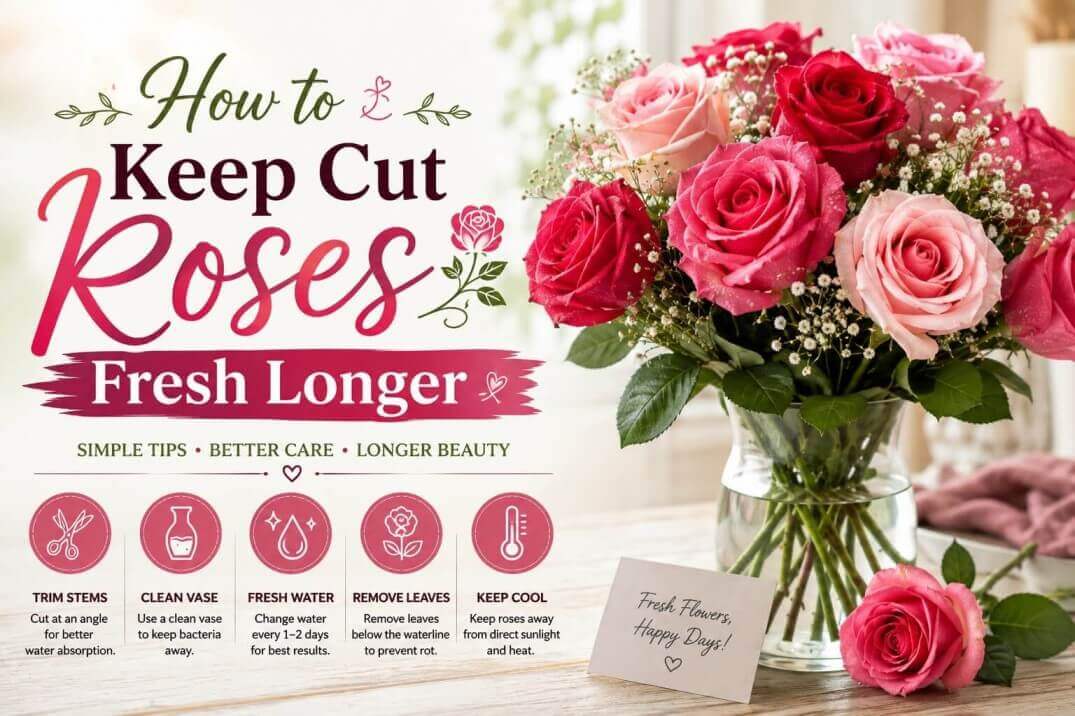
So, the first part of how to keep cut roses fresh longer is trimming the stems at a 45-degree angle using clean, sharp scissors or floral shears. That angled cut is useful because it gives the stem more surface area to take in water, and it also keeps the stem from just sitting flat, like pressed against the bottom of the vase.
Then, as soon as you trim them, get them into water right away; this helps prevent air bubbles that can slow hydration down.
Choose a Clean Vase
A spotless vase is a big deal for real cut-rose care. Wash it with warm water and mild soap, then let it dry or basically air out until it’s totally clean before you arrange anything. When the container is free of grime, fewer bacteria get a chance, and roses are more likely to keep absorbing water the right way for longer.
Daily Care Makes a Difference
Refresh the water regularly
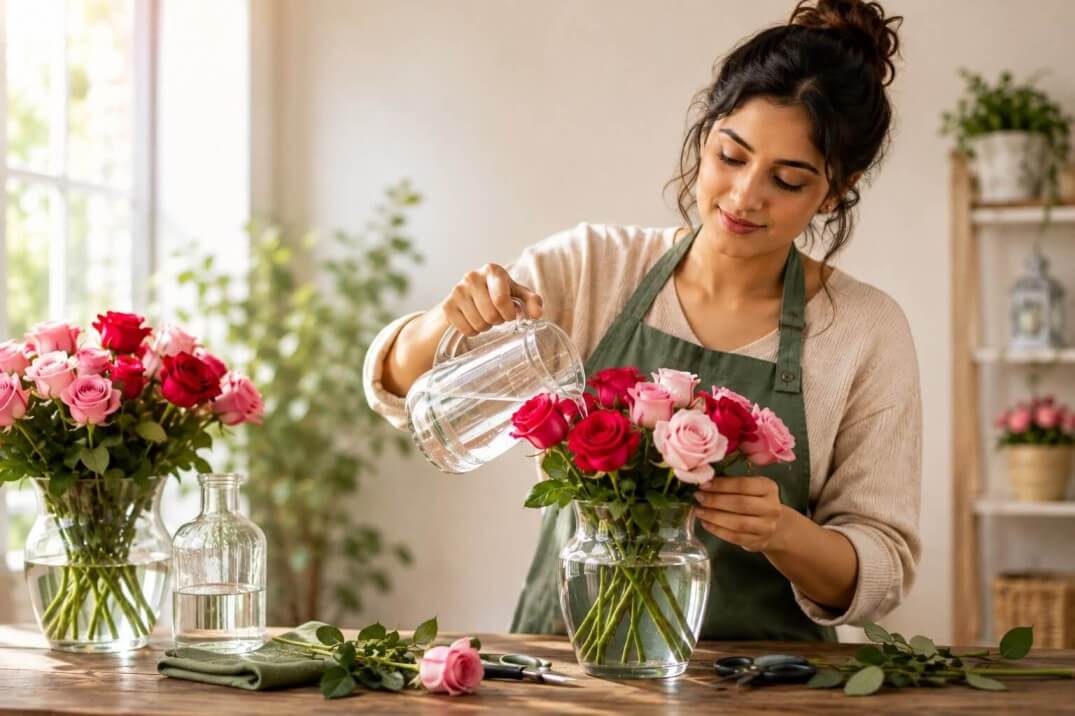
Fresh water is one of the strongest flower care tips for supporting vase life. Replace the water about every two days, and do a quick rinse on the vase before you refill. This keeps the bacteria level down, and the blooms stay hydrated, not droopy.
People who swing by a trusted Waterville flower shop are usually told the same idea: regular water swaps can really boost how long the flowers last.
Remove Leaves Below the Waterline
Leaves that end up underwater break down quick. When they do, bacteria grow faster, which shortens the vase life. Pull off any foliage that sits below the waterline, but leave the higher leaves as-is so the bouquet still looks full and good.
Proper rose flower care is mostly about the vase being clean, plus not having decaying plant bits floating around in there.
Keep Roses Away from Heat
Try placing the bouquet in a cooler spot, away from direct sunlight, away from heating vents, and also away from ripening fruit. Too much warmth can speed up opening, and it makes petals wilt sooner. Cooler conditions help the color look steadier and the petals feel firmer.
These small habits matter for keeping roses fresh across the whole week.
Feed the Flowers
Floral preservatives from stores help by adding nutrients while also slowing bacterial growth. If you don’t have flower food, you can do a tiny sugar amount with a few drops of lemon juice as a short-term patch. Proper feeding helps fresh-cut roses stay healthy and bright.
Extra Tips for Longer Vase Life
Mist the Petals Lightly
A light mist of clean water can keep humidity closer to the petals, especially when things are warm outside. Don’t soak the blooms, though; too much moisture may invite mold, and that’s not the goal.
Lots of specialists treat this like a basic step in effective rose bouquet care.
Recut the Stems Every Few Days
Every two to three days, trim about half an inch from each stem before you place them back in clean water. This “reset” helps them pull in water again, supporting ongoing hydration.
A florist in Waterville Maine, will often point out that regular stem cutting is one of the simplest ways to get how to keep roses fresh working at home.
Enjoy Longer-Lasting Roses
Fresh roses reward a bit of extra effort with more days of beauty and that polished elegance people notice right away. When you stick to simple upkeep, the blooms stay looking great while you get to enjoy each flower longer.
For premium roses, expert floral guidance, and handcrafted arrangements, stop by Waterville Maine Florist; they build flowers designed to stay fresh and memorable.
Frequently Asked Questions
Q. What are some easy tricks to make roses last longer?
A. Trim stems regularly, change the water about every two days, and keep the bouquet away from direct sunlight
Q. Should I use warm or cold water for roses?
A. Room-temperature water is usually best, since it helps roses drink more easily
Q. How often should I change the water?
A. Every two days
Q. Does sugar help roses stay alive longer?
A. A little sugar can help for a short time, but commercial flower food is typically better
Q What is the best way to preserve roses forever?
A. You can dry them hanging upside down, or use silica gel for preservation